
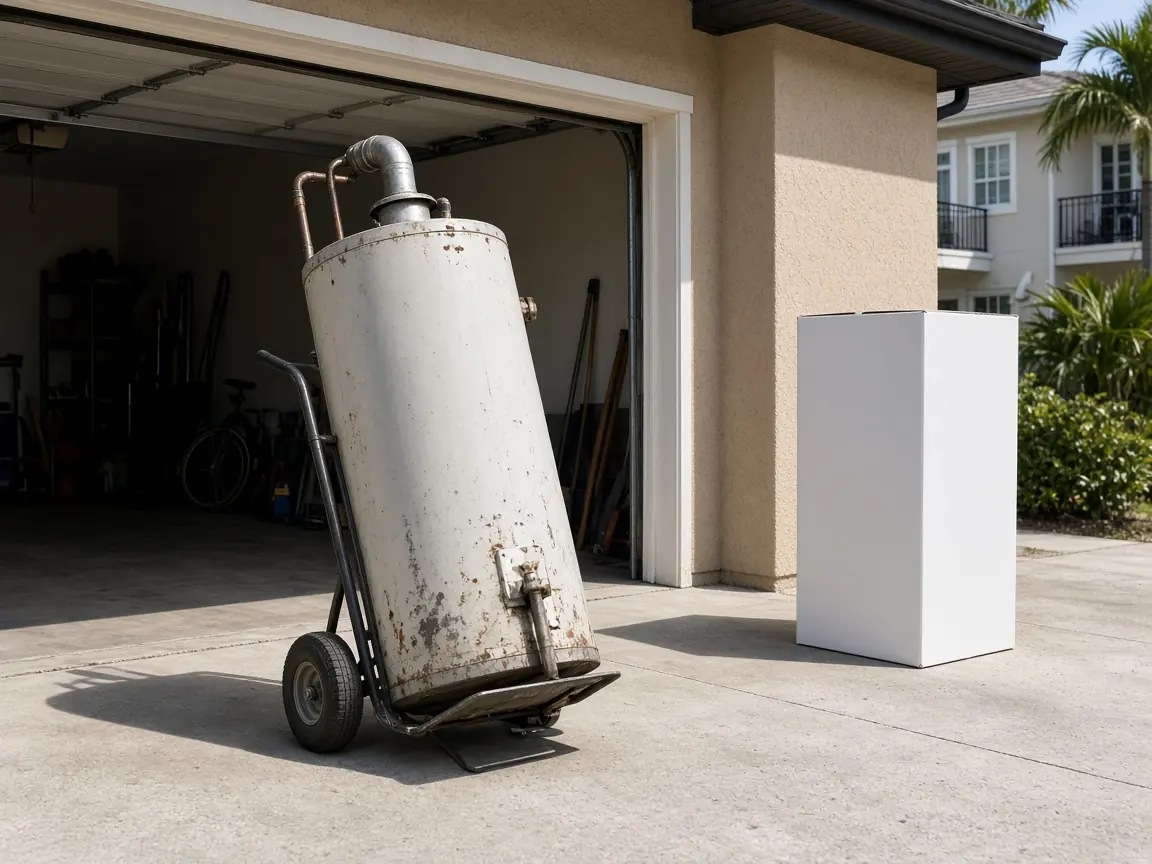
Water heaters rarely fail without warning. Most give you months of hints first: rusty water, rumbling, a shorter hot water supply, moisture at the base. Catching those signs lets you replace a heater on your schedule instead of after it floods a closet. Here are the seven to watch for in a Westminster home.
1. Age past about ten years
Tank heaters commonly last somewhere around 8 to 12 years. The label's serial number usually encodes the manufacture date, and the brand's website explains how to read it. Age alone isn't a reason to replace, but it changes how you weigh every other sign on this list.
2. Rusty or discolored hot water
If only the hot water is rust-colored, the inside of the tank or the anode may be corroding. If both hot and cold are discolored, the cause may be your pipes or the water supply instead. Draining a few gallons from the tank's drain valve and checking the color can help tell the difference.
Rather explain it out loud? One call covers it.
Call 000 000 00003. Rumbling, popping or banging
Sediment from hard water settles on the bottom of the tank. Water trapped beneath it boils in bursts. A flush can help if the sediment is loose. Loud noise that won't go away after a flush often means heavy buildup and an older tank.
4. Hot water runs out sooner
Sediment takes up space, a lower electric element can fail, or a dip tube can crack and mix cold water into the outlet. Some of those are repairs. But a steady decline in capacity on an older tank is a classic end-of-life sign.
5. Moisture or rust at the base
Check the floor and the bottom of the jacket. Water from a fitting or valve above can be repaired. Water from under the tank usually means the tank has rusted through, and it needs replacing. Rust streaks or flaking at the base are early warnings.
6. A dripping relief valve
A relief valve that drips often points to high pressure or thermal expansion rather than a failing tank. But on an old heater, a weeping valve combined with other signs is a reason to plan ahead. Never cap the line. See why relief valves drip.
7. Repairs piling up
A thermocouple one year, a control valve the next, then a leaking drain valve: when repairs stack up on an older heater, the money is usually better spent on a replacement.
Coastal air plays a part
Homes closer to the coast see more corrosion on outdoor and garage equipment. Rust on the jacket, vent connector or gas connector is worth a look during any service visit. See coastal air and water heater life.
What to do next
If you see one minor sign, keep an eye on it and consider maintenance: a flush, an anode check or an expansion tank. If you see several, or any seepage from the tank body, start planning a replacement. Call to ask whether your address is covered, and ask the provider for both repair and replacement prices. Read about water heater replacement and Westminster's permit rules. For efficiency ratings when choosing a new heater, see ENERGY STAR.
When it's time to call
Call if the problem keeps returning, if there's water on the floor, if the fix means opening gas, vent or electrical parts, or if you're deciding between repair and replacement. Have the label details ready, plus your address or nearest cross streets.
Westminster notes
Westminster is in Orange County, California, and its water heater permits come from the city's Building Division. Water is generally considered hard, and the city sits a few miles from the coast, so both sediment and corrosion come up often. Nearby cities issue their own permits, so check the official links on each area page.
Want a second opinion by phone?
Call the number on this page and explain what you're seeing, the heater's type and age and what you've already tried. Give your Westminster address or cross streets, and ask whether you're covered. You'll get an answer on the call, not a callback days later.
Sources checked
Reviewed November 13, 2026. Confirm anything important with the agency, since rules and programs change.