
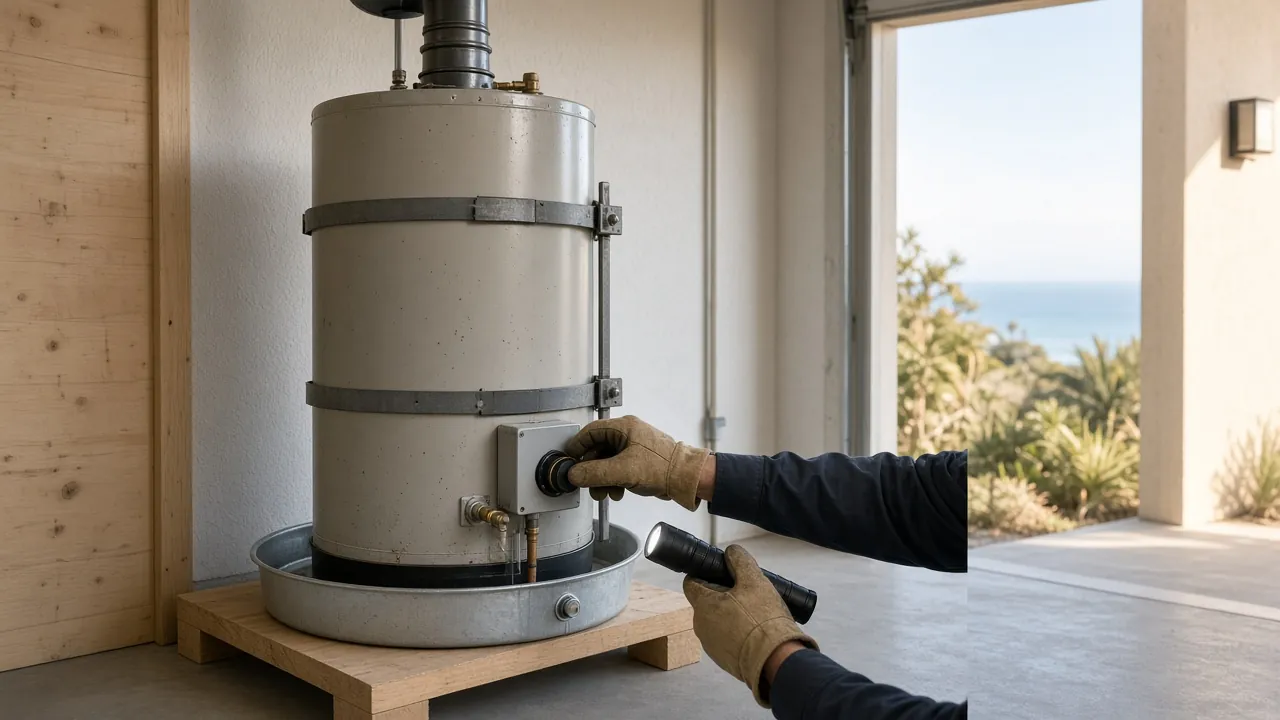
Westminster sits a few miles inland from the coast, so salty air reaches it in a milder form than beachfront homes, but the effects add up over time. Coastal air speeds up corrosion on outdoor tankless units, vent caps, gas connectors and anything metal in an open garage. Hard water does more damage inside the tank. Together, they explain a lot about why water heaters wear out where they do.
What salt air affects
- Outdoor tankless units. Covers, fasteners, exhaust terminals and the plumbing under the unit can corrode.
- Vent caps and connectors. Rusted vent parts can loosen or leak exhaust.
- Gas connectors and fittings. Corrosion on older connectors is worth checking.
- The heater jacket. Rust starting at the base or on the jacket of a garage heater can hide moisture problems.
The closer to the water, the stronger the effect. Homes in nearby Huntington Beach and Seal Beach see more of it than homes farther inland.
What hard water affects
Inside the tank, minerals from hard water settle as sediment and coat tankless heat exchangers with scale. Westminster's water is a blend of groundwater from the basin managed by the Orange County Water District and imported supplies, generally considered hard. That's usually the bigger factor in a tank's life than salt air.
Rather explain it out loud? One call covers it.
Call 000 000 0000Typical lifespans still apply
Tank heaters commonly last somewhere around 8 to 12 years, and tankless units often longer with maintenance. Coastal homes can land toward the shorter end if equipment isn't maintained, especially outdoor units. Where yours falls depends on maintenance, water and installation as much as location.
Maintenance that helps near the coast
- Rinse outdoor units. Gently rinsing the exterior of an outdoor tankless unit occasionally removes salt deposits. Don't spray into vents or electrical parts.
- Inspect vent caps and connectors during any service visit, and replace rusted parts.
- Keep garage heaters dry. Fix roof or door leaks that drip near the heater, and keep the base clear.
- Flush tanks and descale tankless units to handle hard water. See descaling a tankless water heater.
- Check the anode rod every few years.
Choosing equipment
For outdoor tankless units near the coast, ask about models or covers designed for corrosion resistance and about placing the unit away from direct wind and spray. For tanks, a longer warranty often comes with a larger anode. Indoor installation protects equipment from salt air but brings venting and space requirements.
When to replace
Rust on the jacket, seepage at the base, corroded vents or connectors and rusty hot water are all signs to plan ahead. See signs your water heater is failing. Replacement in Westminster requires a city permit; see Westminster Building Division FAQ.
Want a second opinion by phone?
Call the number on this page and explain what you're seeing, the heater's type and age and what you've already tried. Give your Westminster address or cross streets, and ask whether you're covered. You'll get an answer on the call, not a callback days later.
When it's time to call
Call if the problem keeps returning, if there's water on the floor, if the fix means opening gas, vent or electrical parts, or if you're deciding between repair and replacement. Have the label details ready, plus your address or nearest cross streets.
Westminster notes
Westminster is in Orange County, California, and its water heater permits come from the city's Building Division. Water is generally considered hard, and the city sits a few miles from the coast, so both sediment and corrosion come up often. Nearby cities issue their own permits, so check the official links on each area page.
Sources checked
Reviewed November 13, 2026. Confirm anything important with the agency, since rules and programs change.