
Many households set their water heater to about 120°F, a common balance between scald safety, comfort and energy use. Some situations call for a different setting. If anyone in the house is vulnerable to scalds, or has a health condition that makes bacteria a concern, the right answer depends on your household. A mixing valve can let you heat the tank hotter while delivering safer water at the tap.
Why temperature matters
- Scalds. Water gets dangerous quickly as temperatures climb. Young children and older adults have thinner skin and react more slowly, so they're most at risk.
- Bacteria. Legionella and other bacteria can grow in lukewarm water. Very low tank temperatures can raise that risk.
- Energy and wear. Higher settings use more energy, lose more heat and speed up corrosion and scale.
Typical recommendations
Around 120°F is widely recommended for most homes. ENERGY STAR discusses water heating efficiency, and many manufacturers ship heaters near that setting. Some health guidance suggests storing water hotter to control bacteria and using a thermostatic mixing valve to deliver cooler water to fixtures. If someone in your home has a weakened immune system, ask a medical professional which approach fits.
Rather explain it out loud? One call covers it.
Call 000 000 0000How to adjust a gas tank
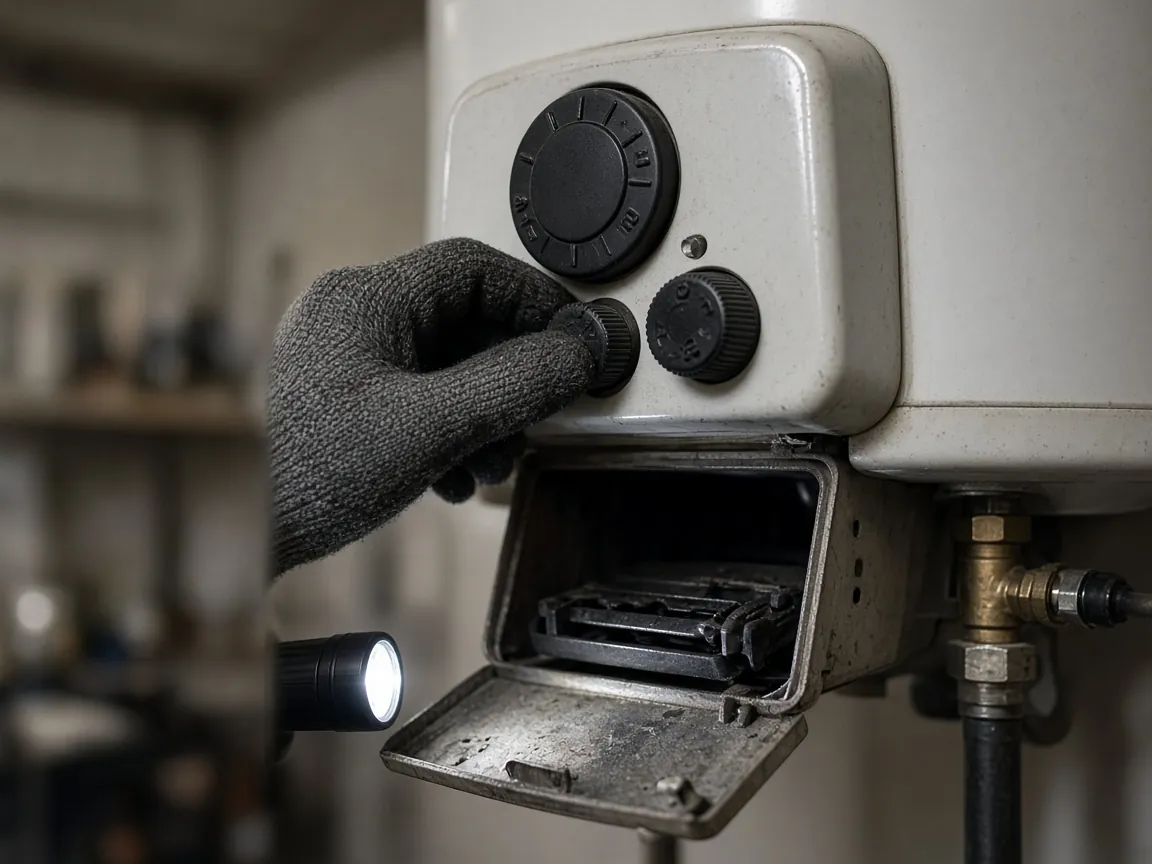
The dial on the gas control valve usually has marks like "Hot," "A," "B" and "C" rather than degrees. Turn it a little at a time. Wait several hours, then measure the water temperature at the tap nearest the heater with a kitchen thermometer. Repeat until it's where you want it.
How to adjust an electric tank
Electric tanks have two thermostats behind panels near live 240-volt terminals. Adjusting them safely means turning off the breaker first, and many owners prefer to have a provider do it. Set both thermostats to the same temperature.
Tankless and heat pump units
Tankless units and most heat pump water heaters have digital controls on the display. Set the temperature directly. Some tankless models limit the maximum setting unless an installer unlocks it.
Mixing valves and anti-scald fixtures
A thermostatic mixing valve at the heater blends hot and cold water to a set outlet temperature, so the tank can stay hotter while the water at the taps stays safer. Modern shower valves also include anti-scald limits that can be adjusted. If your shower never gets hot enough even though the heater is working, the shower valve's limit stop may simply need adjusting.
Signs the setting is wrong
If the water is too hot at the tap, turn it down. If hot water runs out fast or feels lukewarm, check the heater before turning it up; there may be a failed part. If the relief valve drips, the setting may be too high or the pressure may be high. See why relief valves drip.
Vacation mode
Many gas tanks have a "Vacation" setting that keeps the pilot lit with the burner off or low. Tankless and heat pump units often have a vacation mode too. Use it when you're away for several days.
Want a second opinion by phone?
Call the number on this page and explain what you're seeing, the heater's type and age and what you've already tried. Give your Westminster address or cross streets, and ask whether you're covered. You'll get an answer on the call, not a callback days later.
When it's time to call
Call if the problem keeps returning, if there's water on the floor, if the fix means opening gas, vent or electrical parts, or if you're deciding between repair and replacement. Have the label details ready, plus your address or nearest cross streets.
Westminster notes
Westminster is in Orange County, California, and its water heater permits come from the city's Building Division. Water is generally considered hard, and the city sits a few miles from the coast, so both sediment and corrosion come up often. Nearby cities issue their own permits, so check the official links on each area page.
Sources checked
Reviewed November 13, 2026. Confirm anything important with the agency, since rules and programs change.