
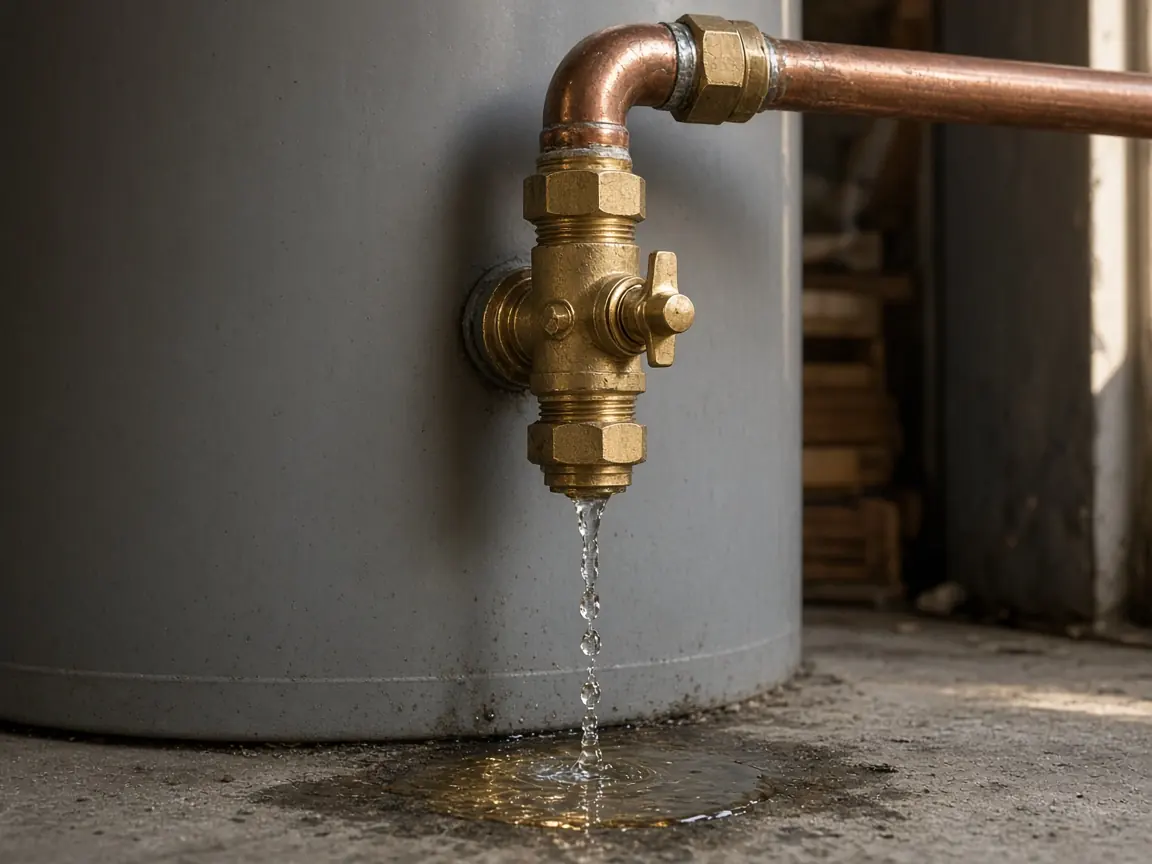
A temperature and pressure relief valve that drips is doing one of two things: protecting the tank from excess pressure or heat, or failing to seal. Either way, the fix is to find the cause, not to plug the line. A capped relief valve is one of the most dangerous mistakes you can make with a water heater.
What the relief valve does
The valve on the top or upper side of the tank opens when water inside gets too hot or the pressure gets too high. Water then runs out through the discharge pipe to a safe place. Without it, an overheated tank could rupture violently. Inspectors check this valve and its discharge line on every water heater installation.
Cause 1: thermal expansion
Water expands as it heats. In an open system, that expansion pushes back into the city supply. Many homes have a pressure regulator or a backflow device that blocks that path, creating a closed system. Each time the heater runs, pressure spikes until the relief valve weeps. The usual fix is an expansion tank, a small tank on the cold line with an air cushion that absorbs the extra volume.
Rather explain it out loud? One call covers it.
Call 000 000 0000Cause 2: high household pressure
If your incoming water pressure is high, the relief valve may open more easily. A pressure gauge on a hose bib can show it. Many plumbing codes set a maximum household pressure and call for a regulator above it. A failing pressure regulator can let pressure creep up over time.
Cause 3: water that's too hot
A thermostat or gas control stuck in the on position can overheat the tank. If the discharge water is very hot, or the valve releases steam, turn the heater off immediately and call.
Cause 4: a worn valve
Valves age. Mineral deposits can keep the seat from closing fully, especially after the valve has opened a few times. A valve that drips with normal pressure and temperature may simply need replacing, a modest repair.
What to do right now
- Don't cap, plug or reduce the discharge line.
- If the water from the line is very hot or there's steam, turn off the gas control or the breaker and call.
- Turn the temperature down a step if it's set high.
- Put a bucket under the discharge pipe if it ends indoors.
- Note how often it drips: constantly, only when the heater runs or only at night when pressure is highest.
Don't test old valves casually
Lifting the test lever on an old relief valve can leave it dripping afterward because debris keeps it from reseating. If you test it, be ready for a replacement.
The fix depends on the cause
An expansion tank, a pressure regulator adjustment or replacement, a new relief valve or a control repair are all possible. A provider can measure pressure, check the expansion tank and test the valve. See leaking water heater help and do you need an expansion tank?. Any relief valve line work on a new installation is part of the inspection under Westminster's permit process; see Westminster Building Division FAQ.
When it's time to call
Call if the problem keeps returning, if there's water on the floor, if the fix means opening gas, vent or electrical parts, or if you're deciding between repair and replacement. Have the label details ready, plus your address or nearest cross streets.
Westminster notes
Westminster is in Orange County, California, and its water heater permits come from the city's Building Division. Water is generally considered hard, and the city sits a few miles from the coast, so both sediment and corrosion come up often. Nearby cities issue their own permits, so check the official links on each area page.
Want a second opinion by phone?
Call the number on this page and explain what you're seeing, the heater's type and age and what you've already tried. Give your Westminster address or cross streets, and ask whether you're covered. You'll get an answer on the call, not a callback days later.
Sources checked
Reviewed November 13, 2026. Confirm anything important with the agency, since rules and programs change.