
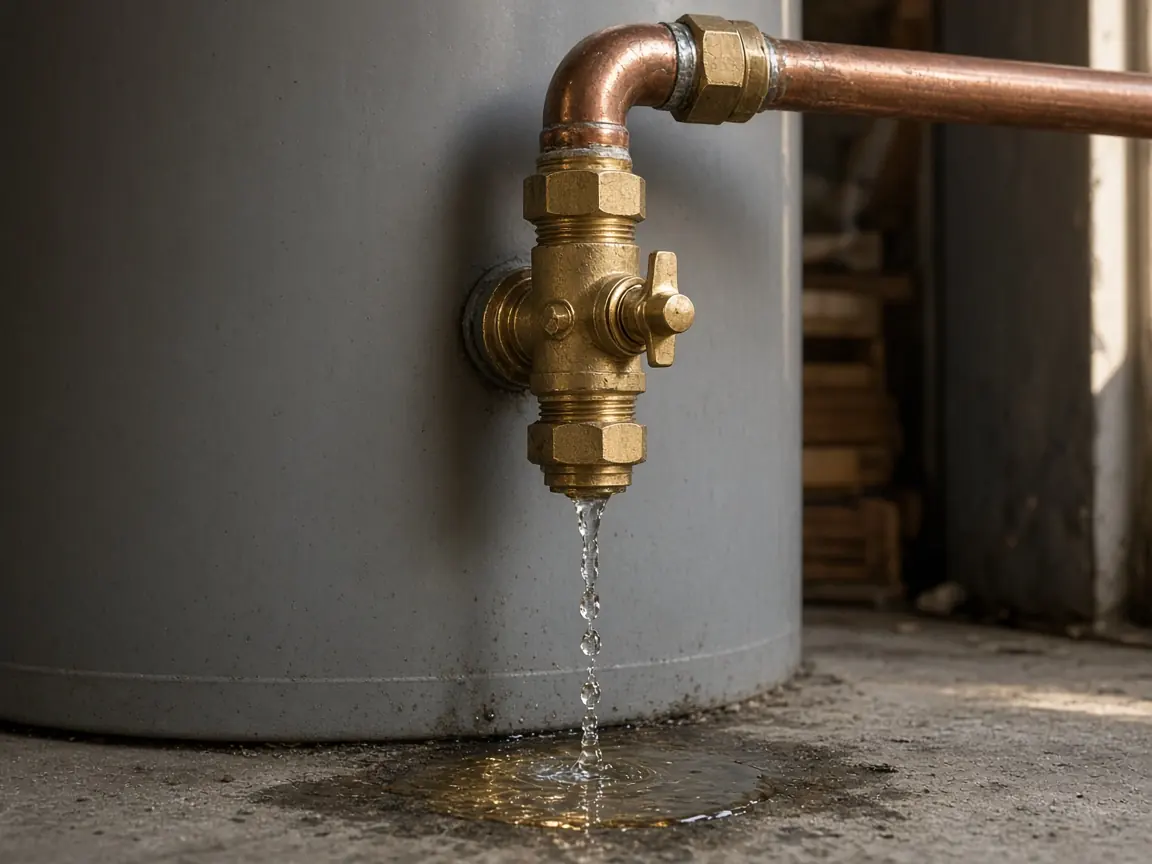
If your home has a pressure regulator, a check valve or a backflow preventer on the water line, your water heater probably needs an expansion tank. Those devices create a closed system. When the heater warms the water, the extra volume has nowhere to go, so pressure spikes. An expansion tank gives that volume somewhere safe to go.
What thermal expansion does
Heated water takes up slightly more space than cold water. In a 40- or 50-gallon tank, that's enough to raise pressure sharply in a closed system every time the burner or elements run. Over time, those spikes stress the tank, the relief valve, faucet cartridges, toilet fill valves and appliance hoses.
Signs you have a thermal expansion problem
- The relief valve drips, especially after the heater runs
- Toilets run briefly on their own, or faucets drip more than they should
- A pressure gauge on a hose bib reads normal when the heater is idle and much higher after it heats
- Water hammer, or banging when valves close
Rather explain it out loud? One call covers it.
Call 000 000 0000How an expansion tank works
An expansion tank is a small steel tank, often about the size of a basketball or larger, installed on the cold water line near the heater. Inside, a rubber diaphragm separates water from a cushion of compressed air. As heated water expands, it pushes into the tank and compresses the air instead of raising pressure throughout the house.
Sizing and setup
Tank size depends on the water heater's capacity and your household's water pressure. The air side should be pre-charged to match your incoming water pressure. That's set with a tire gauge and pump before installation, and it's a step that's often skipped. The tank must be supported properly, because a full tank is heavy, and strapping or a bracket keeps it from stressing the pipe.
Is it required?
Plumbing codes generally require an expansion tank or another means of controlling thermal expansion in closed systems, and inspectors often check for it during a water heater permit inspection. In Westminster, that inspection comes with the city's water heater replacement permit; see Westminster Building Division FAQ.
Maintenance
Expansion tanks don't last forever. If the diaphragm fails, the tank fills with water and stops working. Tap it: the bottom should sound hollow on the air side. Some tanks have a valve on top where a gauge can check air pressure (with the water side depressurized). Many owners replace the expansion tank along with the water heater.
Tankless and heat pump units
Tankless units hold very little water, so thermal expansion is usually less of an issue, but some installers still add an expansion tank in closed systems. Heat pump water heaters have full-size tanks and need the same protection as standard tanks.
What to ask the provider
Ask whether your home has a pressure regulator or backflow device, what your incoming pressure is, whether an expansion tank is needed and whether an existing one is still working. See relief valve dripping and water heater replacement.
Westminster notes
Westminster is in Orange County, California, and its water heater permits come from the city's Building Division. Water is generally considered hard, and the city sits a few miles from the coast, so both sediment and corrosion come up often. Nearby cities issue their own permits, so check the official links on each area page.
Want a second opinion by phone?
Call the number on this page and explain what you're seeing, the heater's type and age and what you've already tried. Give your Westminster address or cross streets, and ask whether you're covered. You'll get an answer on the call, not a callback days later.
When it's time to call
Call if the problem keeps returning, if there's water on the floor, if the fix means opening gas, vent or electrical parts, or if you're deciding between repair and replacement. Have the label details ready, plus your address or nearest cross streets.
Sources checked
Reviewed November 13, 2026. Confirm anything important with the agency, since rules and programs change.