
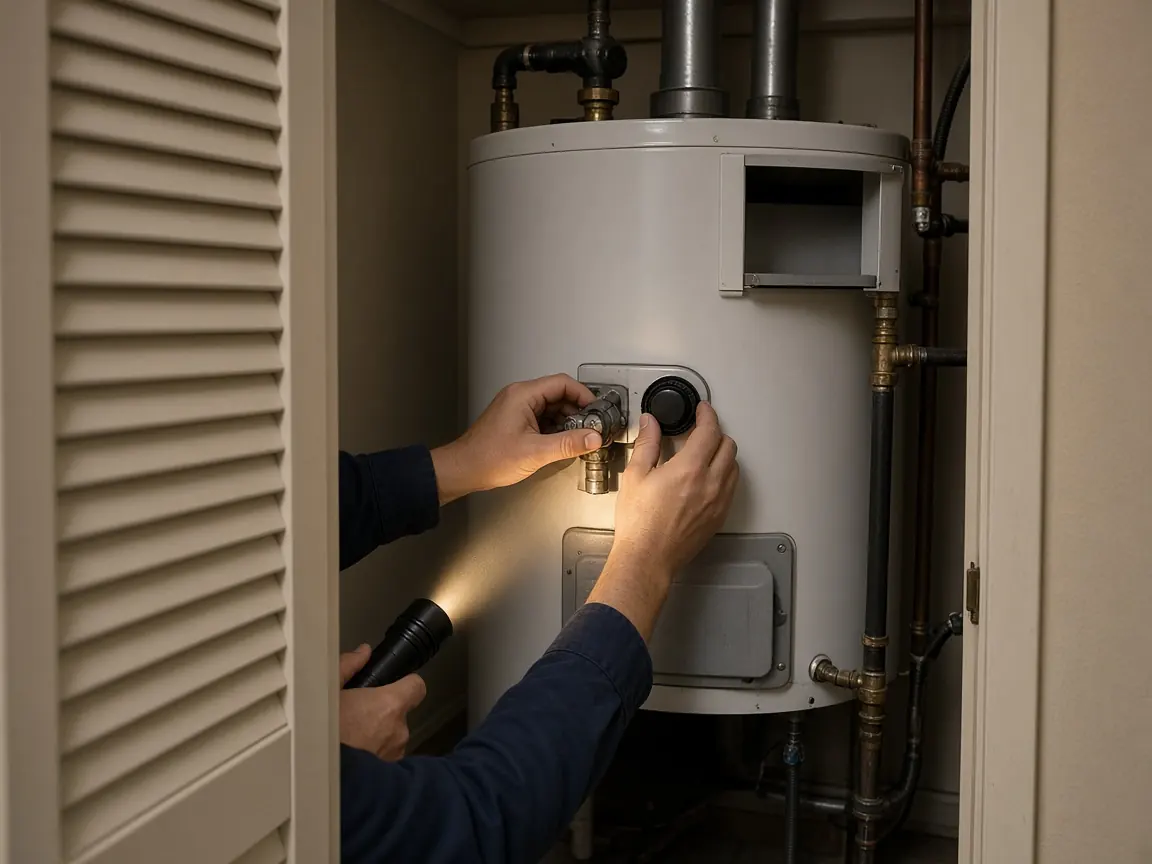
Condo and townhome water heaters in Westminster are often tucked into hall closets, utility rooms or balcony closets, and that changes how repairs and replacements work. Space is tight, venting may run through shared walls or roofs, and your homeowners association may have rules about who can do the work and when.
Who owns the water heater?
In most condos and townhomes, the water heater serving your unit is yours to maintain and replace. In some buildings, a central system serves several units, and the association handles it. Check your CC&Rs or ask the management company before calling, especially if you're not sure where your heater is or whether it serves only your unit.
HOA rules to check
- Approved hours for work, and whether notice is required
- Whether contractors need to provide proof of insurance or a license
- Rules about equipment on exterior walls, like outdoor tankless units
- Whether venting changes need architectural approval
- Requirements for drain pans or leak detection
Rather explain it out loud? One call covers it.
Call 000 000 0000Closet installs: what makes them different
- Size. New tanks are often taller or wider than old ones of the same capacity. Measure the closet's height, width and door opening.
- Combustion air. Gas heaters need enough air to burn safely. Closets may need louvered doors or vents.
- Venting. The vent must run safely to the outside, often through the ceiling and roof. Any change in heater size can affect vent sizing.
- Drain pan. In closets and upstairs, a pan with a drain line is generally required for new installs and protects neighbors below.
- Access. Narrow halls and stairs can make removal and delivery harder. Mention them on the call.
Leaks affect neighbors
In stacked units, a leaking heater can damage the unit below. If you see water, shut off the water to the heater right away, then the gas or power. Tell your association or neighbors if water may have spread. Insurance questions go to your insurer and the association's master policy; we don't give insurance advice.
Tankless and heat pump options
A wall-mounted tankless unit can free closet space, but it needs adequate gas supply and a vent route, which can be difficult in shared buildings. Heat pump units need air volume, so small sealed closets usually don't work unless ducting or louvered doors are added. See tankless installation and heat pump water heaters.
Permits still apply
HOA approval doesn't replace a city permit. Water heater replacement requires a Westminster building permit; see the city's Westminster Building Division FAQ. The inspector checks strapping, venting, the relief valve line, the drain pan and gas connections.
Renters
If you rent, contact your landlord or property manager first. The owner usually decides on repair or replacement and arranges the work.
When you call
Mention that it's a condo or townhome, where the heater is, the closet dimensions if you have them and any HOA requirements. That helps the provider plan.
When it's time to call
Call if the problem keeps returning, if there's water on the floor, if the fix means opening gas, vent or electrical parts, or if you're deciding between repair and replacement. Have the label details ready, plus your address or nearest cross streets.
Westminster notes
Westminster is in Orange County, California, and its water heater permits come from the city's Building Division. Water is generally considered hard, and the city sits a few miles from the coast, so both sediment and corrosion come up often. Nearby cities issue their own permits, so check the official links on each area page.
Want a second opinion by phone?
Call the number on this page and explain what you're seeing, the heater's type and age and what you've already tried. Give your Westminster address or cross streets, and ask whether you're covered. You'll get an answer on the call, not a callback days later.
Sources checked
Reviewed November 13, 2026. Confirm anything important with the agency, since rules and programs change.